
You’ve identified a problem and run some basic validation tests. Now comes the part that makes many technical founders break into a cold sweat: actually talking to potential customers.
It is easy to hide behind a landing page or a survey. It is much harder to look someone in the eye (or on a Zoom call) and realize your "brilliant" feature idea might not be necessary. However, customer discovery is the only way to truly understand the "why" behind user behavior. Without it, you are just guessing.
Rule #1: Stop Pitching, Start Listening
The biggest mistake founders make in early interviews is trying to "sell" their idea. When you pitch, people will be polite. They will tell you it’s a "great idea" because they don't want to hurt your feelings. This is "false positive" data, and it's dangerous.
To avoid the risks of not validating your startup idea, your goal is to extract facts about their life, not opinions on your solution.
The Art of the Question
The quality of your startup depends on the quality of your questions. You want to move away from hypothetical "would you" questions and toward historical "how did you" questions.
| Bad Questions (Avoid) | Good Questions (Ask These) |
|---|---|
| "Would you use an app that does X?" | "Tell me about the last time you dealt with Problem." |
| "How much would you pay for this?" | "How much are you currently spending to solve this?" |
| "Is this a good idea?" | "What is the hardest part about Task?" |
| "Do you like this feature?" | "Walk me through your current workflow for Task." |
By focusing on their past behavior, you get a clear picture of their actual pain points. If they haven't tried to find a workaround for the problem yet, it might not be a "hair-on-fire" problem worth solving.
Boost your productivity. Start using our app today.
Save valuable time while learning everything you need
Identifying the Gap
During these conversations, pay close attention to the tools they already use. Are they using a competitor's software? A messy spreadsheet? If you want to dive deeper into what they are already using, use our guide on competitor research to help frame your discovery.
Understanding their current "stack" also helps you prepare for financial management down the road, as you'll see exactly where their budget is currently allocated.
How to Scale Your Discovery
If you are an incubator manager or a university lead, you know that teaching students and founders to "get out of the building" is the hardest part of the curriculum. Our partnership page explains how we help organizations provide the right tools to make this discovery phase structured and actionable.
Use AI to Prep Your Script
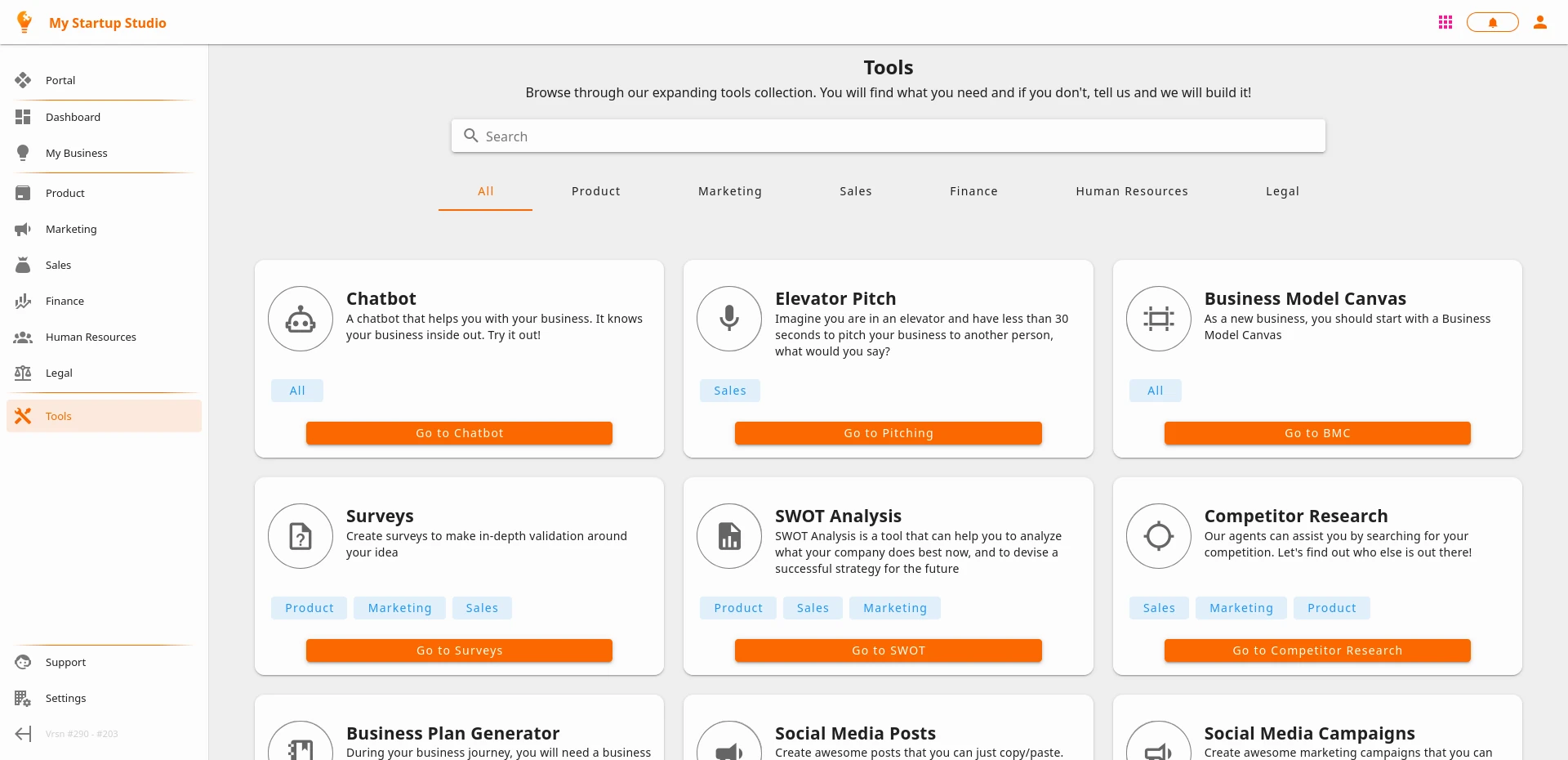
Don't go into an interview cold. You can use our In-app AI-Tools to:
- Generate a list of non-leading interview questions based on your niche.
- Create personas for the types of people you should be interviewing.
- Summarize your interview notes to find recurring themes.
Your Next Step
Your mission for the next 72 hours is to conduct 5 "Problem Interviews." Do not mention your product. Simply ask about their struggles and listen for the "emotional peaks"—the moments where they get visibly frustrated.
Log your findings and start building your user personas in the MyStartup.Studio App.
Ready to turn those insights into action? Get started here.
More from the Blog:
Next in the series: "Minimum Viable Everything"—how to take those interview insights and strip your product down to its absolute, most essential core.