
Every great startup begins with a spark—an "Aha!" moment where a new product or service suddenly seems obvious. But here is a sobering truth: most startups don’t fail because they couldn't build their product; they fail because they built something nobody actually wanted.
In this first installment of our startup guide, we are diving into the most critical phase of the journey: the ideation phase. To build a successful business, you must learn to fall in love with the problem, not your solution.
The "Solution-First" Trap
Many founders start with a specific feature or technology in mind. They think, "I want to build an AI-powered app for X." This is "solution-first" thinking. The danger here is that you might spend months developing a sophisticated tool only to realize that the problem you’re solving isn't actually a priority for your customers.
As we discussed in our article on the risks of not validating your startup idea, skipping the "problem-finding" stage can lead to wasted resources and a product that gathers digital dust.
What Makes a Problem "Worth Solving"?
Not all problems are created equal. To find a viable startup idea, look for "hair-on-fire" problems. If someone’s hair is on fire, they don’t care if your solution is a high-tech extinguisher or a simple bucket of water—they just need the fire out now.
When evaluating an idea, ask yourself:
- Intensity: How painful is this problem for the user?
- Frequency: How often does the user encounter this issue?
- Monetization: Are people currently spending money (or a lot of time) trying to fix it?
- Market Context: Is the industry changing in a way that makes this problem more urgent? You can learn more about assessing the landscape in our guide to competitor research.
Boost your productivity. Start using our app today.
Save valuable time while learning everything you need
How to Spot Problems in the Wild
- Look at Your Own Friction: What part of your workday is incredibly frustrating? What task do you constantly procrastinate on?
- Listen for Complaints: When you hear people say, "I wish I could..." or "Why is it so hard to...", you’ve found a potential startup seed.
- Industry Gaps: Sometimes the best ideas come from seeing how "old school" industries (like construction, legal, or logistics) are still using outdated tools.
Refining Your Spark with AI
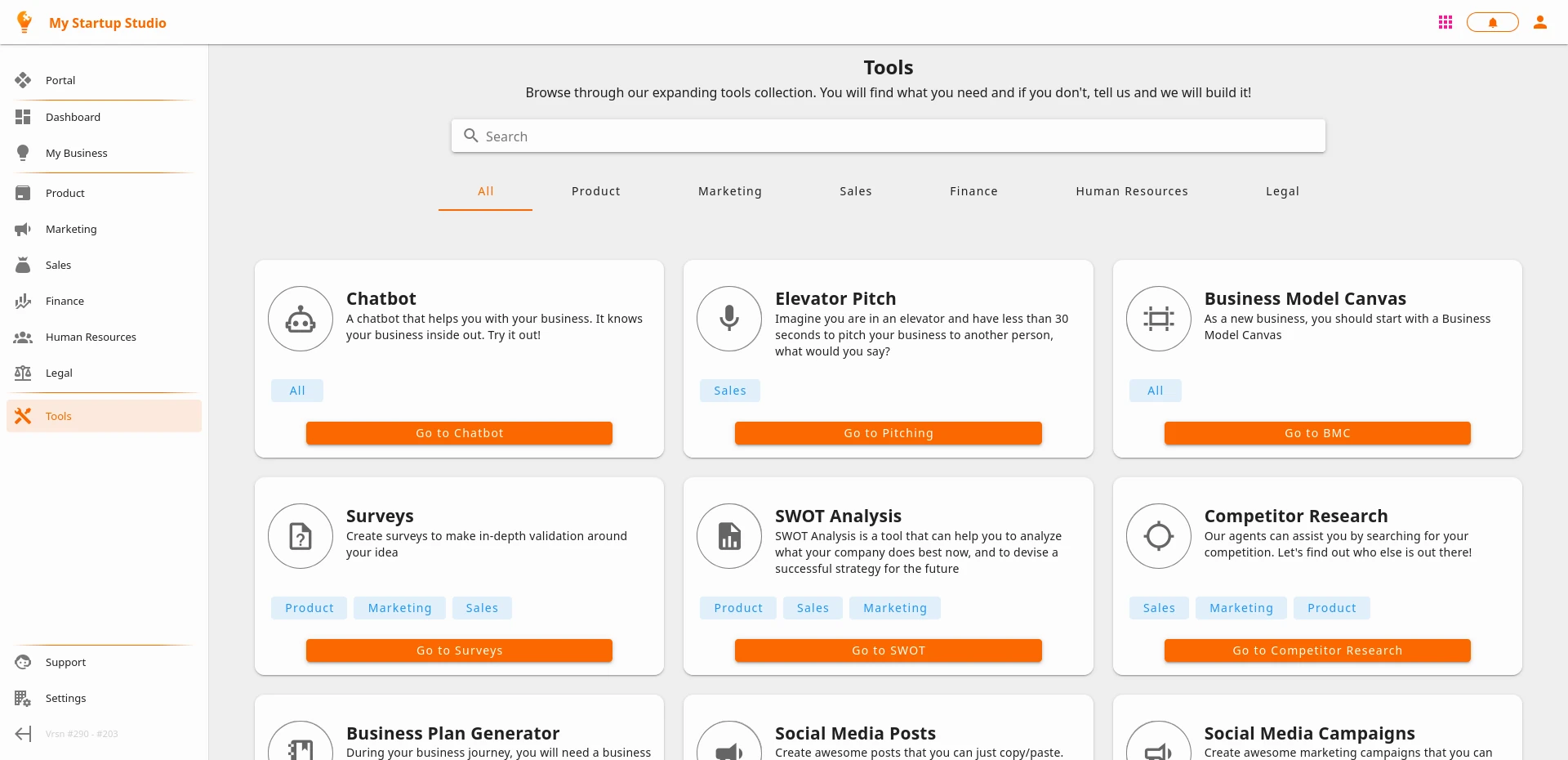
Once you’ve identified a potential problem, the next step is to refine it. You don't have to do this alone. Our In-app AI-Tools are designed to help you brainstorm, structure your thoughts, and turn a vague concept into a concrete business hypothesis.
If you are an incubator or university looking to help your cohort navigate these first steps, check out our partnership page to see how we can support your entrepreneurs.
Your First Step Today
The goal of this week is simple: Stop thinking about features and start observing problems. Keep a "bug list" for the next 48 hours. Every time you encounter a frustration, write it down.
Ready to start building? Get started with MyStartup.Studio today and use our web app to document your first findings.
Related Reading:
In the next article, we’ll talk about "The Reality Check"—how to validate that the problem you found is actually a business opportunity.